Tartan - online puzzles
































Online puzzle Tartan
Tartan
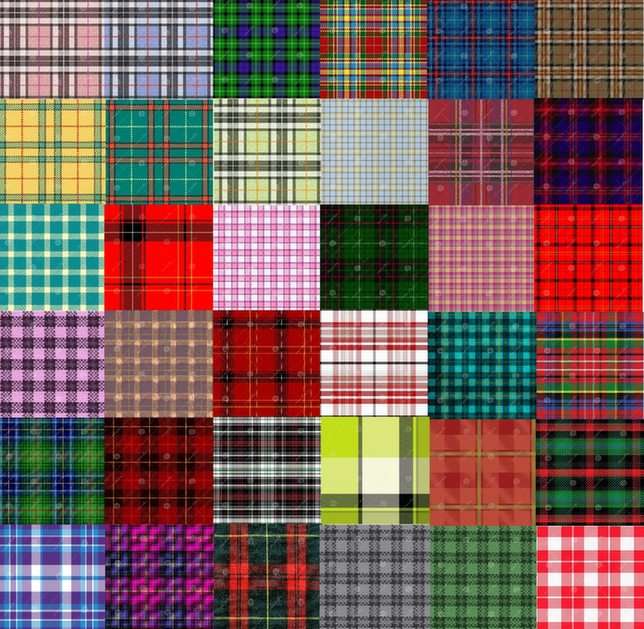
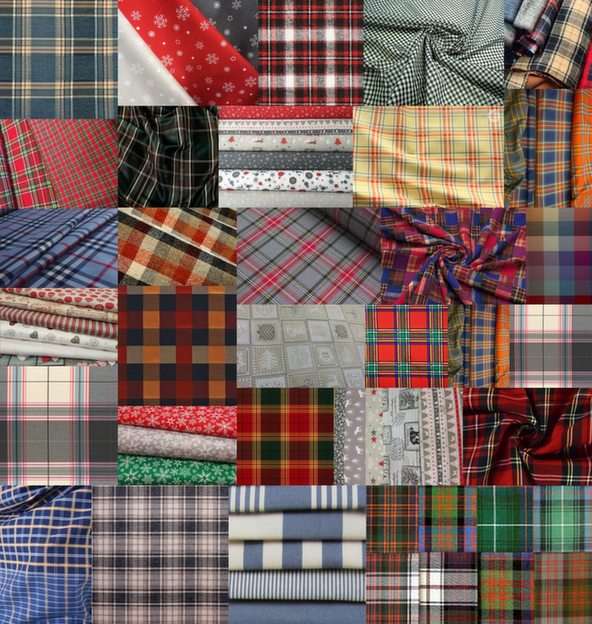
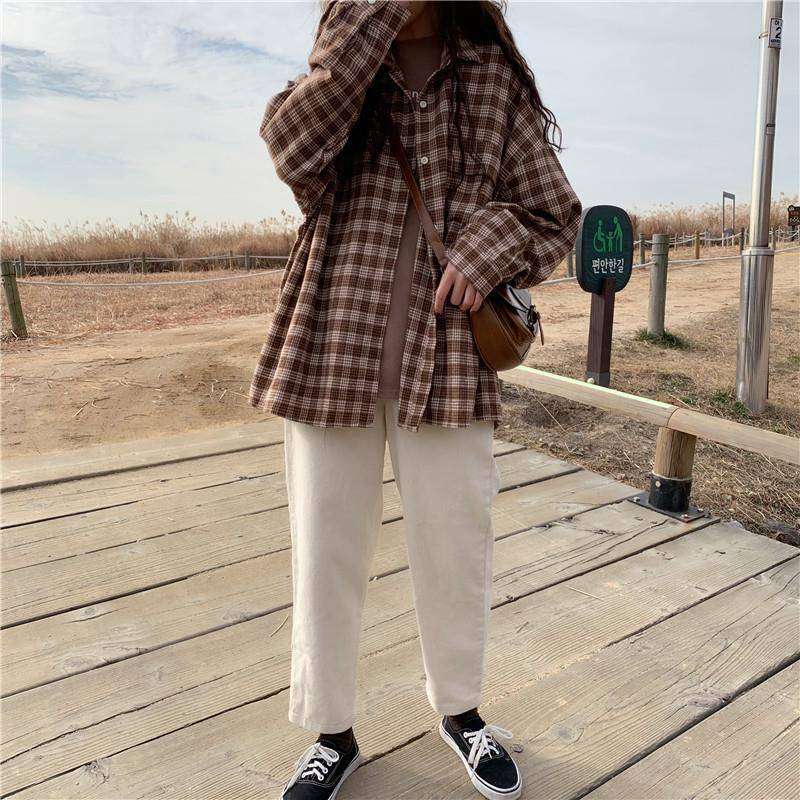
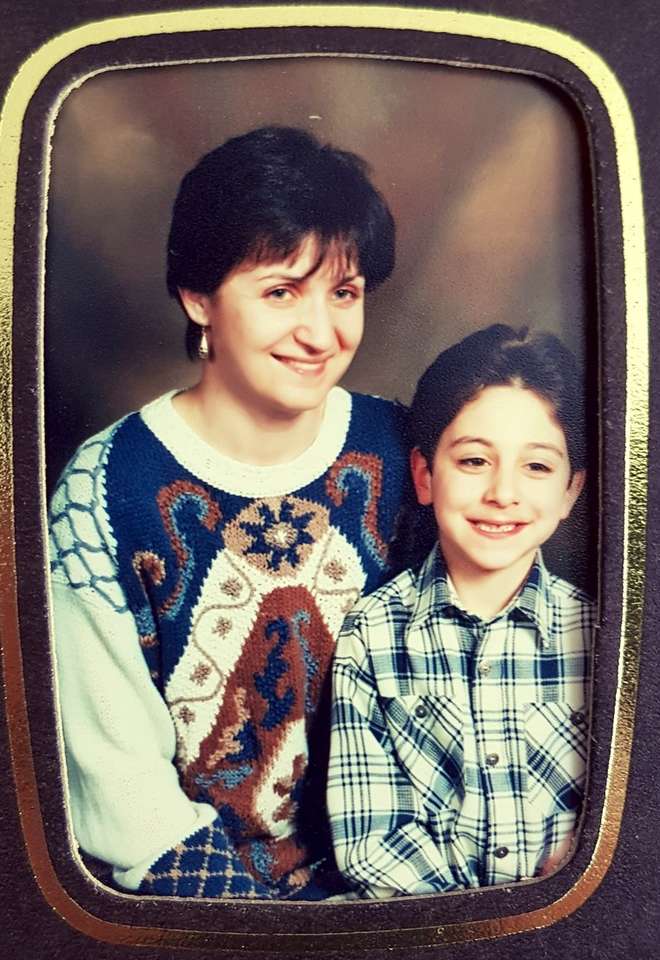
Tartan (Scottish Gaelic: breacan [ˈpɾʲɛxkən]) is a patterned cloth consisting of criss-crossed, horizontal and vertical bands in multiple colours, forming simple or complex rectangular patterns. Tartans originated in woven wool, but now they are made in other materials. Tartan is particularly associated with Scotland, as Scottish kilts almost always have tartan patterns. The earliest surviving samples of tartan-style cloth are around 3,000 years old and were discovered in Xinjiang, China.
Outside of Scotland, tartan is sometimes also known as "plaid" (particularly in North America); however in Scotland, a plaid is a large piece of tartan cloth which can be worn several ways.
Traditional tartan is made with alternating bands of coloured (pre-dyed) threads woven in usually matching warp and weft in a simple 2/2 twill pattern. Up close, this pattern forms alternating short diagonal lines where different colours cross; from further back, it gives the appearance of new colours blended from the original ones. The resulting blocks of colour repeat vertically and horizontally in a distinctive pattern of rectangles and lines known as a sett.
Scottish tartan was originally associated with the Highlands. Early tartans were only particular to locales, rather than any specific Scottish clan; like other materials, tartan designs were produced by local weavers for local tastes, using the most available natural dyes. The Dress Act of 1746 attempted to bring the warrior clans there under government control by banning Highland dress, then an important element of Gaelic Scottish culture. When the law was repealed in 1782, tartan was no longer ordinary dress for most Highlanders. It was adopted more widely as the symbolic national dress of all Scotland when King George IV wore a tartan kilt in his 1822 visit to Scotland; it was promoted further by Queen Victoria. This marked an era of rather politicised "tartanry" and "Highlandism".
While the first uniform tartan is believed to date to 1713 (with some evidence of militia use earlier), it was not until around the early 19th century that patterns were created for specific Scottish clans; most of the traditional ones were established between 1815 and 1850. The Victorian-era invention of artificial dyes meant that a multitude of patterns could be produced cheaply; mass-produced tartan fashion cloth was applied to a nostalgic (and increasingly aristocratic, and profitable) view of Scottish history.
Today tartan is no longer limited to textiles, but is also used as a name for the pattern itself, regardless of medium. The use of tartan has spread outside Scotland, especially to countries that have been influenced by Scottish culture. However, tartan-styled patterns have existed for centuries in some other cultures, such as Japan, where complex kōshi fabrics date to at least the 18th century, and Russia (sometimes with gold and silver thread) since at least the early 19th century. Maasai shúkà wraps and Indian madras cloth are also often in tartan patterns, distinct from the Scottish style.